Artificial Intelligence (AI) is no longer a futuristic concept reserved for large technology companies. Today, businesses of all sizes are using AI to improve productivity, reduce costs, increase revenue, and create better customer experiences. Whether you run a small local business, an online store, a professional service company, or a large enterprise, learning how to integrate AI into your business can provide a significant competitive advantage.
The rapid growth of AI tools has changed the way companies operate. Tasks that once required hours of manual work can now be completed in minutes. Customer support can be automated, marketing campaigns can be optimized, data can be analyzed instantly, and business decisions can be made with greater accuracy.
However, many business owners still struggle with one important question: how to integrate AI into your business successfully without wasting time, money, or resources.
This comprehensive guide explains everything you need to know about integrating AI into your business, including practical strategies, real-world applications, implementation steps, common mistakes, future trends, and expert insights.
Why AI Matters for Modern Businesses
AI is transforming industries because it allows businesses to process information faster, automate repetitive tasks, and discover opportunities that humans might overlook.
Businesses that successfully implement AI often experience:
- Increased operational efficiency
- Lower labor costs
- Faster decision-making
- Improved customer satisfaction
- Higher sales and revenue
- Better marketing performance
- Enhanced data analysis
- Improved employee productivity
The most important benefit is not replacing people but helping employees perform better work.
Businesses that delay AI adoption risk falling behind competitors that can deliver services faster, cheaper, and more accurately.
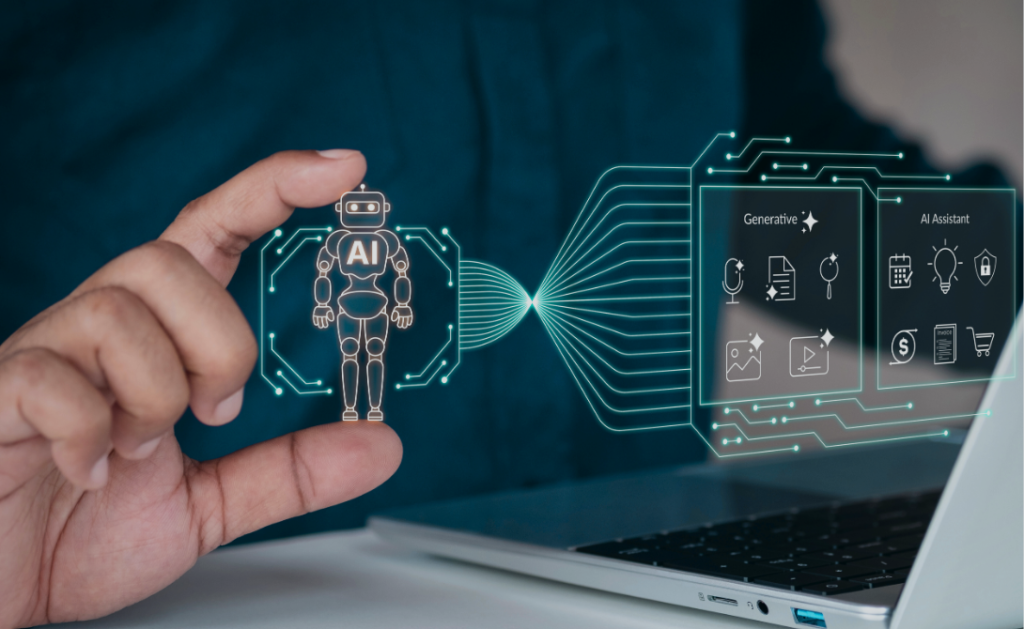
Understanding What AI Means in Business
Before learning how to integrate AI into your business, it is important to understand what AI actually means.
Artificial Intelligence refers to computer systems that can perform tasks requiring human intelligence. These tasks include:
- Learning from data
- Recognizing patterns
- Understanding language
- Making predictions
- Solving problems
- Generating content
- Automating workflows
Modern business AI solutions generally fall into several categories:
Generative AI
Generative AI creates new content such as:
- Articles
- Marketing copy
- Images
- Emails
- Reports
- Product descriptions
Predictive AI
Predictive AI analyzes historical data to forecast future outcomes.
Also Read: How AI Is Changing Business: The Complete Guide to AI’s Impact on Modern Companies in 2026
Examples include:
- Sales forecasting
- Demand prediction
- Customer behavior analysis
- Financial forecasting
Conversational AI
Conversational AI powers:
- Chatbots
- Virtual assistants
- Customer support systems
Automation AI
Automation AI handles repetitive tasks such as:
- Data entry
- Appointment scheduling
- Invoice processing
- Workflow management
Understanding these categories helps business leaders identify where AI can create the most value.
How to Integrate AI Into Your Business: Step-by-Step Process
The biggest mistake companies make is adopting AI without a clear strategy.
Instead, follow a structured approach.
Step 1: Identify Business Problems First
Successful AI implementation starts with business goals rather than technology.
Ask questions like:
- Which tasks consume the most time?
- Where are employees struggling?
- What causes customer complaints?
- Which processes create bottlenecks?
- Where are costs highest?
For example:
A customer service department receiving hundreds of repetitive inquiries daily may benefit from AI chatbots.
A marketing team creating large amounts of content may benefit from AI content generation tools.
The goal is solving real business problems.
Step 2: Evaluate Existing Data
AI relies on data.
Businesses should assess:
- Customer information
- Sales records
- Website analytics
- Operational data
- Marketing performance data
The quality of AI results depends heavily on the quality of available data.
Clean, organized, and accurate data leads to better outcomes.
Step 3: Start With Small AI Projects
One of the smartest ways to learn how to integrate AI into your business is by starting small.
Rather than transforming the entire company immediately, begin with one department.
Examples include:
- AI customer support chatbot
- AI-powered email marketing
- AI content creation
- AI scheduling assistant
Small projects reduce risk and help teams gain experience.
Step 4: Select the Right AI Tools
Different businesses require different solutions.
Popular AI categories include:
Customer Service AI
These tools can:
- Answer questions
- Route support tickets
- Provide 24/7 assistance
Marketing AI
These tools help with:
- Content generation
- SEO optimization
- Social media management
- Email campaigns
Sales AI
Sales-focused AI can:
- Score leads
- Predict purchases
- Automate follow-ups
Operations AI
Operational AI assists with:
- Workflow automation
- Inventory management
- Resource allocation
Choose tools based on specific business needs rather than industry hype.
Step 5: Train Employees
AI adoption often fails because employees resist change.
Successful companies focus on education.
Employees should understand:
- What AI can do
- What AI cannot do
- How AI helps their work
- How to use AI tools effectively
When employees see AI as an assistant rather than a threat, adoption improves significantly.
Step 6: Measure Results
Every AI project should have measurable goals.
Track metrics such as:
- Revenue growth
- Cost savings
- Customer satisfaction
- Productivity improvements
- Response times
- Conversion rates
Data-driven evaluation ensures AI investments generate real value.
Best Areas to Apply AI in Business
Many business leaders ask where they should begin.
The following areas often deliver the fastest return on investment.
AI for Customer Service
Customer service is one of the easiest places to start.
AI can:
- Answer common questions
- Resolve simple issues
- Route complex requests
- Provide instant support
Benefits include:
- Reduced support costs
- Faster response times
- Higher customer satisfaction
Customers increasingly expect immediate assistance, making AI support solutions highly valuable.
AI for Marketing
Marketing departments have become major beneficiaries of AI.
AI can help create:
- Blog posts
- Ad copy
- Social media content
- Product descriptions
- Email campaigns
Beyond content creation, AI can analyze customer behavior and optimize campaigns automatically.
Businesses often see better marketing performance while reducing workload.
AI for Sales
Sales teams use AI to identify opportunities and improve conversions.
Applications include:
- Lead scoring
- Customer segmentation
- Personalized recommendations
- Sales forecasting
AI enables sales professionals to focus on high-value activities instead of administrative work.
AI for Human Resources
Human resource departments increasingly use AI for:
- Resume screening
- Candidate matching
- Employee onboarding
- Training recommendations
This reduces administrative burdens while improving hiring efficiency.
AI for Finance
Financial teams benefit from AI through:
- Fraud detection
- Budget forecasting
- Expense tracking
- Cash flow prediction
AI helps businesses make more informed financial decisions.
AI for Operations
Operational efficiency is often where AI creates the greatest impact.
AI can optimize:
- Supply chains
- Inventory management
- Production planning
- Logistics
This leads to significant cost savings and improved performance.
Common Challenges When Integrating AI
Learning how to integrate AI into your business also requires understanding potential obstacles.
Poor Data Quality
Bad data produces poor results.
Businesses must prioritize data accuracy before implementing AI.
Lack of Strategy
Many organizations adopt AI because competitors are doing so.
Without clear objectives, projects often fail.
Employee Resistance
Fear of job displacement can create resistance.
Communication and training are essential.
Unrealistic Expectations
AI is powerful but not magical.
Businesses should expect gradual improvements rather than instant transformation.
Security Concerns
Protecting customer and business data is critical.
Companies should establish governance policies before deploying AI solutions.
The AI Integration Framework Used by Successful Companies
Many successful organizations follow a simple framework:
Discover
Identify opportunities.
Prioritize
Select high-impact projects.
Test
Run small pilot programs.
Measure
Evaluate performance.
Scale
Expand successful initiatives.
This phased approach reduces risk and maximizes return on investment.
Real-World Examples of AI in Business
Retail Businesses
Retailers use AI for:
- Product recommendations
- Demand forecasting
- Customer support
- Inventory management
Healthcare Organizations
Healthcare providers leverage AI for:
- Patient scheduling
- Administrative automation
- Diagnostic support
- Predictive analytics
Financial Services
Banks and financial institutions use AI for:
- Fraud prevention
- Risk analysis
- Customer service
- Personalized financial advice
Manufacturing Companies
Manufacturers apply AI for:
- Predictive maintenance
- Quality control
- Supply chain optimization
- Production planning
These examples demonstrate that AI benefits nearly every industry.
Building an AI-Driven Culture
Technology alone does not create transformation.
Organizations need a culture that embraces innovation.
Leadership should encourage:
- Experimentation
- Continuous learning
- Data-driven decision making
- Cross-functional collaboration
An AI-driven culture enables businesses to adapt quickly to changing markets.
How Small Businesses Can Integrate AI
Many small business owners believe AI is only for large corporations.
This is no longer true.
Affordable AI solutions allow small businesses to compete effectively.
Small businesses can start with:
- AI chatbots
- Email automation
- Social media management
- Content creation
- Appointment scheduling
The key advantage of small businesses is agility. They can often adopt new technology faster than larger organizations.
AI and Customer Experience
Customer experience has become a major competitive differentiator.
AI helps businesses provide:
- Personalized recommendations
- Faster service
- Predictive support
- Customized communication
Customers increasingly expect personalized interactions.
Companies that deliver these experiences often achieve stronger customer loyalty.
Future Trends in AI Business Integration
The future of AI is moving beyond simple automation.
Emerging trends include:
AI Agents
Autonomous AI systems will perform increasingly complex business tasks.
Hyper-Personalization
Businesses will create highly customized experiences for individual customers.
Predictive Operations
AI will anticipate problems before they occur.
Human-AI Collaboration
Employees and AI systems will work together more closely.
Industry-Specific AI Solutions
More specialized tools will emerge for healthcare, finance, retail, legal services, manufacturing, and other industries.
Businesses that begin integrating AI today will be better positioned for future developments.
ALso Read: Why Salesforce Leads in AI Business Solutions: The Complete Guide for Modern Businesses
Expert Insights: The Most Effective AI Strategy
One of the biggest misconceptions about AI is that it is primarily a technology project.
In reality, successful AI integration is a business transformation project.
The most successful organizations focus on:
- Solving customer problems
- Improving employee productivity
- Creating better experiences
- Making smarter decisions
Technology is simply the tool that enables these outcomes.
Companies that view AI strategically tend to outperform those focused solely on automation.
How to Create Your AI Implementation Roadmap
A practical roadmap might look like this:
Month 1:
- Assess business needs
- Identify opportunities
Month 2:
- Evaluate AI tools
- Prepare data
Month 3:
- Launch pilot project
Month 4:
- Train employees
- Collect feedback
Month 5:
- Measure results
Month 6:
- Expand successful initiatives
This structured approach helps organizations avoid costly mistakes.
Key Mistakes to Avoid
When learning how to integrate AI into your business, avoid these common errors:
- Implementing AI without clear goals
- Ignoring employee training
- Using poor-quality data
- Expecting immediate results
- Neglecting security concerns
- Choosing tools based on popularity rather than business needs
- Failing to measure performance
Avoiding these mistakes significantly improves success rates.
Final Thoughts
Understanding how to integrate AI into your business is becoming essential for long-term success. AI is no longer an optional technology reserved for innovative startups or global enterprises. It is rapidly becoming a core business capability across every industry.
The most effective strategy is to start with business challenges, identify opportunities for improvement, launch small pilot projects, train employees, measure results, and scale successful initiatives over time.
Businesses that adopt AI thoughtfully can improve efficiency, enhance customer experiences, reduce costs, and create new growth opportunities. Those that delay may find it increasingly difficult to compete in an AI-driven marketplace.
The future belongs to organizations that successfully combine human creativity, strategic thinking, and artificial intelligence. By taking action today, your business can position itself for sustainable growth and long-term success.
Frequently Asked Questions
Can AI help a business operate 24/7?
Yes. AI-powered systems such as chatbots, virtual assistants, and automated workflows can continue serving customers and processing tasks outside normal business hours.
How long does it take to see results from AI integration?
Many businesses notice improvements within a few weeks for simple projects. Larger implementations may require several months before delivering significant results.
Should every department use AI?
Not necessarily. Businesses should focus on departments where AI can solve real problems or create measurable value. Starting with one department is often the best approach.
Is coding knowledge required to integrate AI into a business?
No. Many modern AI platforms offer user-friendly interfaces that require little or no programming experience.
Can AI improve employee satisfaction?
Yes. By automating repetitive tasks, AI allows employees to focus on more meaningful and rewarding work, often increasing job satisfaction.
What is the ideal budget for starting an AI project?
There is no universal budget. Many businesses begin with low-cost subscription tools and gradually increase investment as they achieve measurable results.
How can businesses ensure ethical AI use?
Organizations should establish clear guidelines regarding transparency, privacy, fairness, and accountability while regularly reviewing AI-generated outcomes.
Will AI completely replace business decision-makers?
No. AI supports decision-making by providing insights and recommendations, but human judgment remains critical for strategic planning, leadership, and relationship management.